

Chaska was born in the confusion of Minnesota’s prestatehood period. Between 1851—and the treaties of Mendota and of Traverse des Sioux—and Minnesota’s statehood in 1858, federal land policy drove Chaska’s founding. The short-lived Shaska Company, speculating in the land fever, pursued civic projects and a milling canal to dream of profits that never came.
Land Treaties, Policy, and Speculation
The opening of land to settlers often followed U.S. treaties with American Indian nations. In 1851 the Dakota people in Minnesota were pressured to sign two treaties, Traverse des Sioux and Mendota. Those treaties opened about half of Minnesota to legal settlement. The area of Chaska was part of the newly opened land.
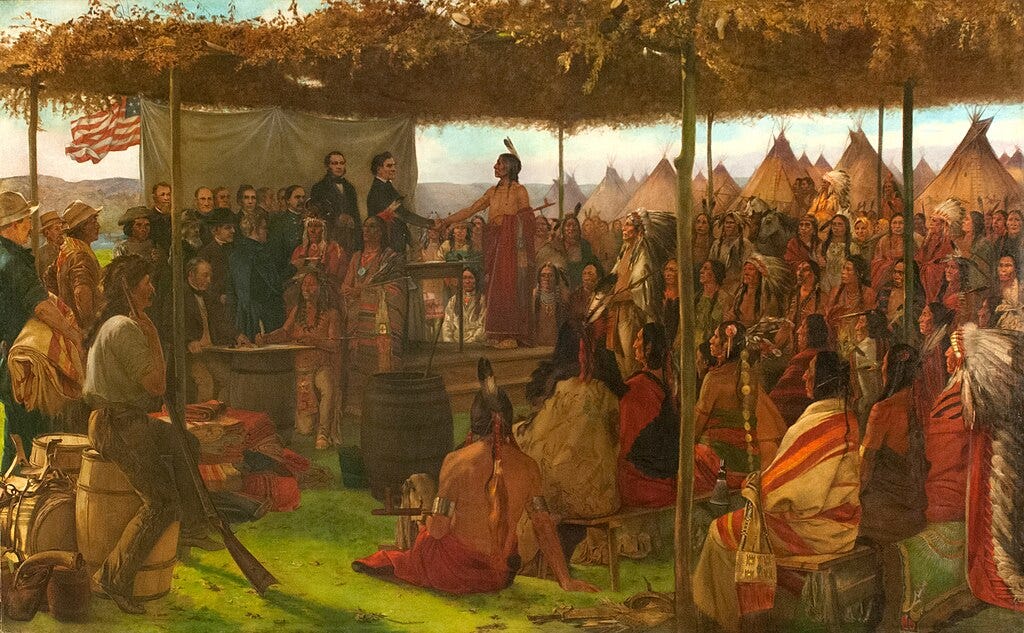
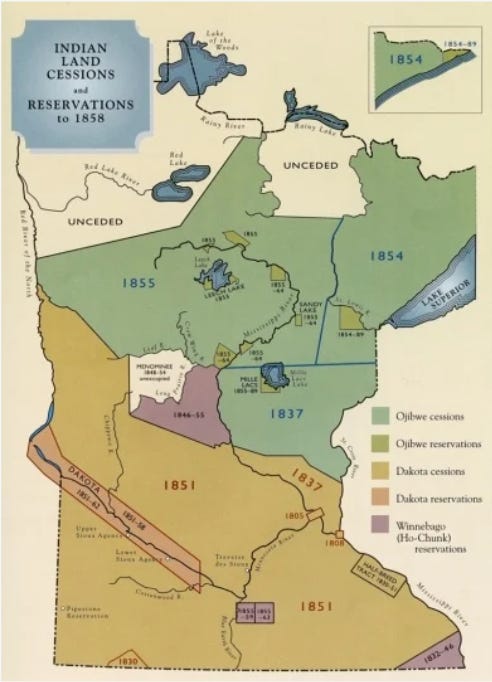
However, settlers could not simply buy land from local American Indian nations or other parties. Legally, the land passed from the nations to the U.S. government. In an effort to spur immigration into these areas, the federal government offered the land very cheaply—sometimes even free. The money from the land sales went to pay down federal debt.
Land speculators were also typical buyers of land. “Commonly land was purchased by settlers from [speculative] corporations, many of which were directly involved in treaty negotiations.” Corporate involvement in negotiations gave the speculators an edge in knowing which land would be for sale. Some had already been exploring the best land so when it was legally for sale, they were able to snap it up immediately.
Occasionally squatters settled on land before it was legally available. In some cases squatters built structures or other improvements. However, when another party made legal claim to that government land, the squatters might be evicted and the land sold from under them.
Paper Towns
Because speculators wanted to profit from their land purchases, they needed to attract settlers. As more migrants arrived in towns, the price became steeper—the law of supply and demand. However, because so much land opened at once—not only in Minnesota but far beyond—speculators created “paper towns” to attract settlers. Minnesota historian Theodore Blegen wrote that towns and villages were platted “with lots enough for more than eight times the population of Minnesota in 1860.” These imaginary towns were mapped out in their entirety, showing streets of course, but also parks, schools, and other nonexistent amenities. Many of these towns existed only on paper, never attracting any settlers. Plats of the paper towns were sent to the land speculators’ agents in the East, where they tempted immigrants looking for cheap land.
Typically, people think of maps as neutral indicators of various topographies or data. The paper town maps, however, were pure propaganda, trying to lure investors with money. David Lanegran, former geography professor at Macalester College in Saint Paul, commented, “I’m sure some of these were never expected to be towns. They were just schemes to sell land to unsuspecting people back east.” Lanegran added, “In general, they’re a monument to greed. People were trying to seize an opportunity that would make them rich.” It was part of a wave of speculation as individuals and companies tried to cash in on the land bonanza.
Shaska Company
First Claimant, Thomas Holmes
Out of all this frantic capitalism, a local speculative firm, the Shaska Company, was born. Interestingly, historians R. I. Holcombe and William H. Bingham wrote in 1915, “The name Chaska . . . should be pronounced Tchah-SKAY, with the accent on the second syllable. It is, however, now commonly pronounced Shas-ca or Shasky, with the accent on the first syllable.” Today of course, most people pronounce it CHA-skuh, although some Dakota people still use the original.
Weeks after the treaties of 1851, Thomas Holmes, a Saint Paul resident, took a guided trip along the Minnesota River, upriver from the capital city. Looking for investment land, he chose the site of a Dakota village, now Shakopee, at which a trading post had been established. (“Shakopee” comes from another Dakota word, meaning “six.”) He also selected land where Chaska is now located. Chaska became the first town in the county—which at that time was part of Hennepin County, only later breaking away as Carver County.
Later Transactions
In fall 1851 Holmes sold his claim to Shaska—as the town was spelled then—to David Fuller, another Saint Paul investor/speculator. In the mid-1850s, Fuller sold his claims to his two brothers. None of the three, nor Holmes, ever lived in Chaska.
A private surveyor laid out the town in June 1854, though the land couldn’t be sold until a federal surveyor had completed a separate survey of the area. The Fullers and others organized the Shaska Company in 1857 to administer sales in the newly platted town. The company received a charter from the territorial legislature to do business. (Remember that Minnesota achieved statehood only in 1858.)
Unlike some paper towns, in Chaska, immigrants and others began settlement soon after it was platted. For example, the lot at what is now 301 Third Street East was sold to a Judge Andrew Chatfield in January 1856. Like the Fullers, Chatfield likely never lived in Chaska. He quickly sold the lot to another buyer. The house that stands on that corner lot today, according to Carver County records, was built probably in 1860.
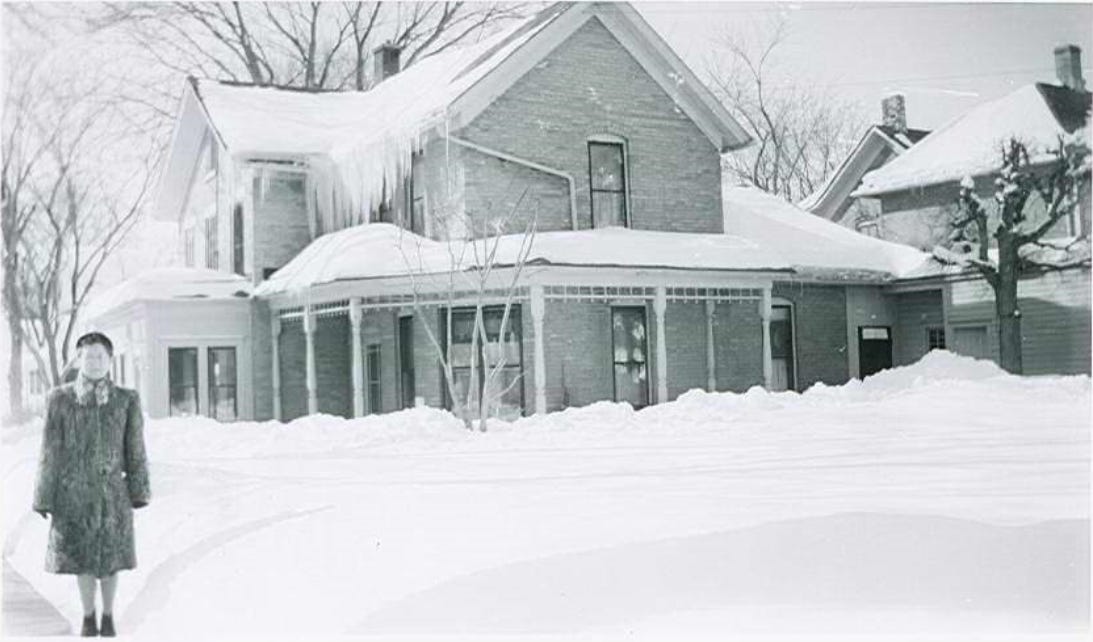
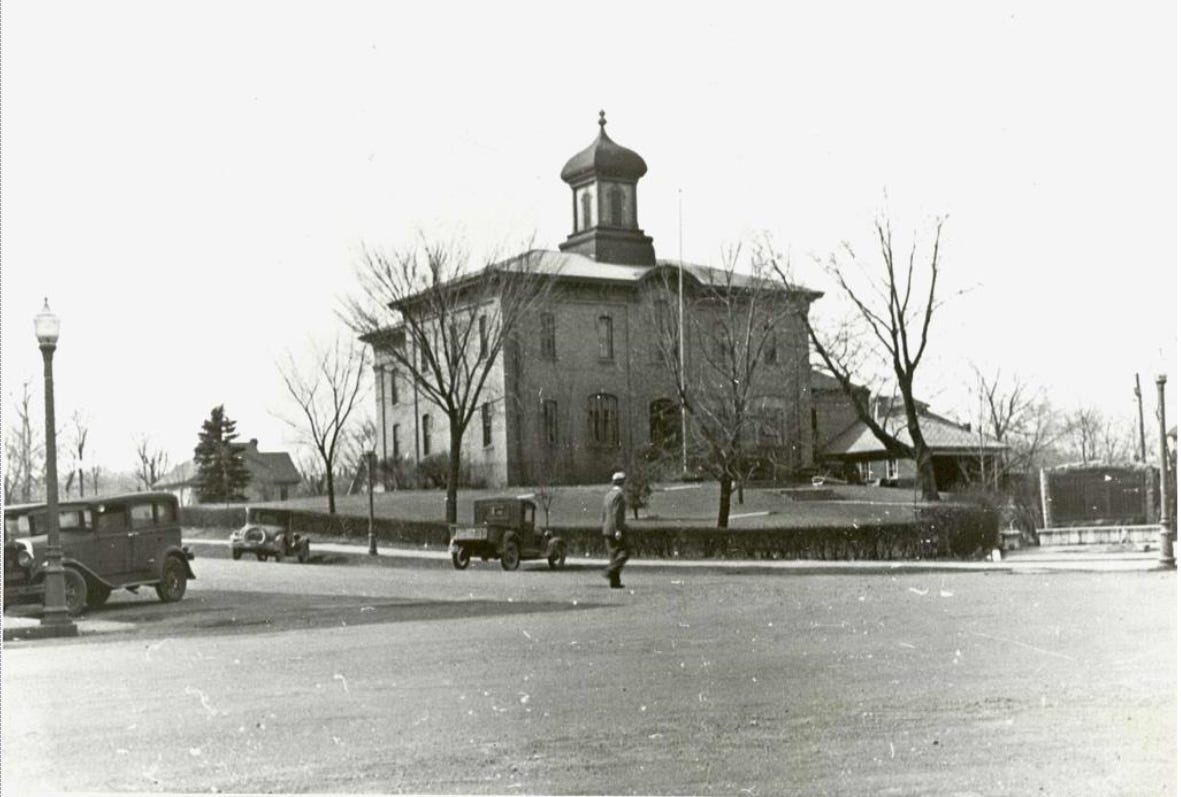
As soon as the Shaska Company officers received their territorial charter to operate, they deeded certain lots to be dedicated for county buildings. These included the county courthouse and other buildings, located on the block bordered by Third and Fourth Streets West and Chestnut and Pine Streets. This was the block south of the current city buildings on Fourth Street West. The company could sell the remaining lots.
Canal Project
Along with selling lots in Chaska city limits, the Shaska Company engaged in other entrepreneurial activities. The most notable was a canal project. The company bought the town site of Saint Valentine, near Smithtown on Lake Minnetonka. It was proposed to build a canal from that site to the Minnesota River at Chaska.
A survey conducted in late 1856 and early 1857 showed a decrease in elevation from Saint Valentine to Chaska of 126 feet over about 7 miles. Rather than serve transportation, the canal was meant to power mills at Chaska. Decades later, in 1882, Edward Neill, writing about the project, wryly commented that “the Chaska, Minnetonka & Liverpool canal was the modest name assumed.” The canal never powered any mills and indeed never got beyond the dreaming stage.
Panic of 1857
As described, the Shaska Company, like so many speculative ventures, sought to cash in on the land boom. However, a nationwide land bust soon caught up with the company.
One of biggest bank lenders to speculative corporations was a major New York branch bank of the Ohio Life Insurance and Trust Company. In late August 1857, just months after the Shaska Company was officially organized, Ohio Life crashed. Scholar Ruth Beddie, in 1937, wrote,
The banking business was prostrated almost at once since bankers had speculated in real estate [borrowing so much money that they] had very little money on hand for general business purposes. . . . The worst of the financial storm hit Minnesota in October.
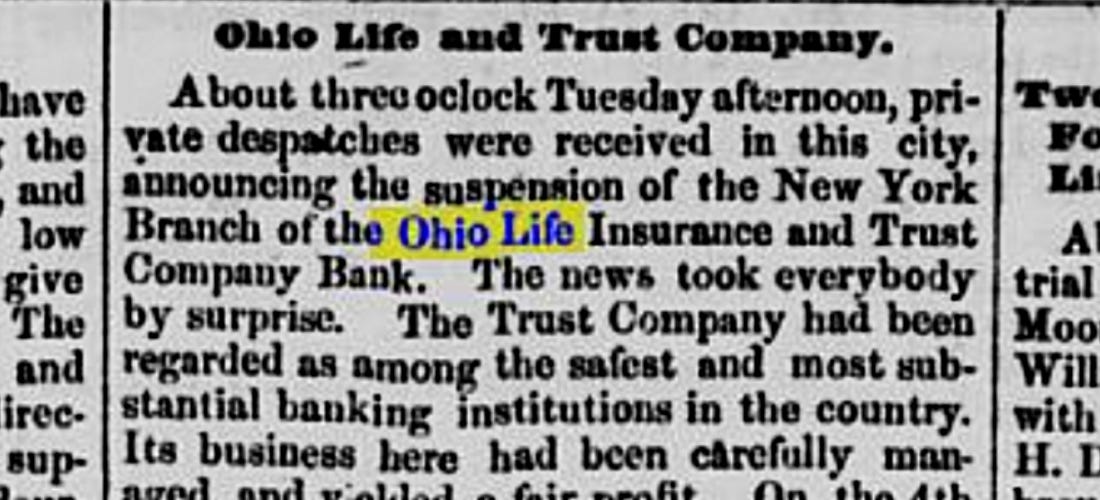
Retired Minnesota Historical Society historian Rhoda Gilman reported that “the whole monetary system collapsed because there was no federal standard monetary system, it was all bank notes and the banks were all prostrate.” She added that the panic really ended only with the start of the Civil War in 1860.
The End of the Shaska Company, the Start of Chaska
A major project had been secured in 1857 by the Shaska Company—to build county buildings. Chaska was interested in becoming the county seat, with all the financial benefits that designation included. The Shaska Company secured the construction project, cementing Chaska’s claim.
Immediately after purchasing the land set aside for Chaska from the federal government and platting it, the company deeded several lots along what was platted as Third Street West. Then the county issued bonds to pay for the labor and materials for the buildings. Bonds, of course, are like a promise to repay a certain amount of interest on the original loan amount. Repayment assumes the borrower will be able to make at least the repayment amount in profit.
Constructing the County Seat
Work on the courthouse began in March, though investors couldn’t foresee the financial disaster looming only months hence. Walls were erected, but before the building had a roof, the land speculation bubble burst. The Shaska Company, facing numerous legal actions, negotiated with the county to take over the company’s debt. The county agreed to repay the bonds sold to investors and complete the courthouse project.
With the panic later that fall, wrote Holcombe and Bingham, “disaster followed speedily . . . [and] the Shaska Company went to pieces.” As cash reserves tightened throughout the country, local investors who had bought bonds demanded immediate payment as the nationwide economic system crumbled. The county did not have enough cash to pay them, and the bank from which they had borrowed went under and could not guarantee the loan. The Shaska Company, unable to raise further capital, was shuttered.
Protracted Lawsuit
The next two and a half decades saw a hangover from the intoxication of the land boom. Though the financial panic ended about 1860, Chaska’s legal battles continued until late 1872.
Bond investors, hoping to recoup their investment, brought a protracted lawsuit against the county for bond repayment. During that time, Waconia town officials started a campaign to move the county seat to that town. The sudden competition spurred Chaska to act on the bond lawsuit. The debts were paid, and the county seat remained in Chaska. The last shadow of the Shaska Company faded into the past, and Chaska could look to the future.
Chaska to the Future
The ambitious Shaska Company proved short-lived. But during its brief existence, it launched a fragile village founded on land speculation, platted as a paper town, and oppressed by financial catastrophe. Anchored by its position as county seat, however, and buoyed by gradual settlement, speculation eventually became community. More than 150 years later, as an echo of the Shaska Company, the town of Chaska stands as a sign of Minnesota’s prestatehood growing pains, bold schemes, and financial reality.
Learn More!
Blegen, Theodore C. (1975). Minnesota: A history of the state [Online resource] (2nd ed.). University of Minnesota Press. In the Internet Archive.
DeCarlo, Peter J. (2013, April 22). Treaty of Mendota, 1851. Minnesota Historical Society.
Dyson, Hannah. (2019, May 28). Land Speculation, 1985–1857. MNopedia.
Glaeser, Edward L. (2014). A Nation of Gamblers: Real Estate Speculation and American History. Harvard University and National Bureau of Economic Research.
Holcombe, R. I., & Bingham, William H. (eds.). (1915). Compendium of History and Biography of Carver and Hennepin Counties, Minnesota. Henry Taylor & Co.
Kaul, Greta. (2019, August 12). The map is not the territory: A brief tour of Minnesota’s paper towns. MinnPost.
Neill, Edward D. (1882) History of the Minnesota Valley: Including the explorers and pioneers of Minnesota (Carver County [Chapter LIII (53)]) [Online resource]. North Star Publishing.
Treaties Matter. (n.d.). Land Speculation, Town Site Development, and Newspapers.
Weber, Eric W. (2012, November 19). Treaty of Traverse des Sioux, 1851. MNopedia.